
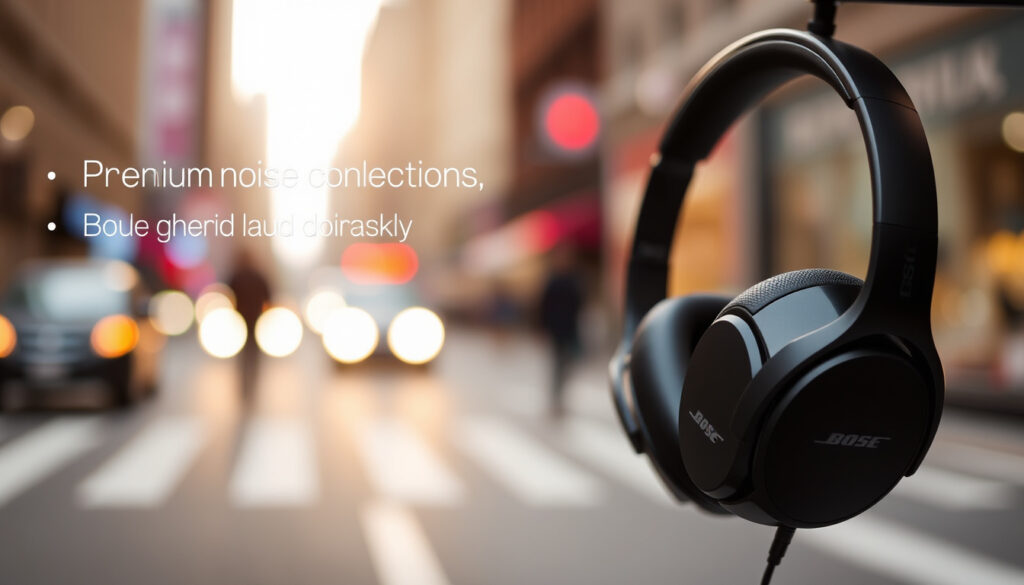
Bose QuietComfort Ultra Headphones Review: Are They Worth the Premium?
Are Bose QuietComfort Ultra Headphones Worth It?
The Bose QuietComfort Ultra Headphones represent the company’s most advanced noise-cancelling flagship to date, offering a combination of class-leading ANC performance, premium comfort, and refined sound quality that appeals to commuters, remote workers, and audiophiles alike. Since their launch, both first-generation and second-generation models have consistently ranked among the top recommendations from expert reviewers, often cited as the default choice in the premium wireless headphone category.
The headphones deliver approximately 87% real-world noise reduction, blocking between 20 and 40 decibels across different frequencies. This performance translates to noticeably quieter airplane cabins, office environments, and household appliances like kitchen blenders. According to multiple reviews, the ANC system handles sudden loud noises—such as vacuum cleaner spikes—with smooth transitions that prevent jarring interruptions.
Comfort remains a defining characteristic of the QuietComfort Ultra line. Despite weighing slightly more than older Bose models and competing Sony headphones, the plush ear cushions and balanced clamping force allow extended wearing sessions exceeding ten hours without discomfort, even for users wearing glasses. Sound quality scores approximately 8.9 out of 10 after equalizer adjustments through the free Bose app, with punchy bass, clear midrange, and detailed highs. The second generation introduces subtle improvements in instrument separation and reduced tonal richness for a more natural presentation.
Key Specifications at a Glance
| Feature | Specification |
|---|---|
| Price | $429 USD |
| Noise Cancelling | Best-in-class, 87% reduction, 11 adjustable levels |
| Battery Life | Up to 24 hours with ANC enabled |
| Weight | 253 grams |
| Driver Size | 35mm |
| Bluetooth | 5.3 |
| Available Colors | Black, White Smoke, Sandstone |
| IP Rating | None |
The Bose QuietComfort Ultra achieved an overall score of 9.2 out of 10 from reviewers, with critics noting it functions exceptionally well as a daily driver for users prioritizing noise isolation and long-term wearability over absolute audio fidelity.
Primary Strengths and Weaknesses
- Noise Cancelling: Industry-leading performance with customizable 11-level ANC system
- Comfort: Luxurious ear pads and lightweight frame support extended listening sessions
- Sound Quality: Full-bodied, balanced audio with spatial Immersive Audio feature comparable to Apple’s spatial audio
- Battery Life: Tested for 10+ hours of continuous playback, meeting demands of full workdays or long flights
- Build Quality: Compact and functional design, though some reviewers note materials feel modest for the price point
- Features: Transparency mode, multipoint pairing, and free Bose app for EQ customization
Bose QuietComfort Ultra vs Sony WH-1000XM5 and AirPods Max
When comparing the Bose QuietComfort Ultra against its closest competitors, the headphones establish clear advantages in several critical areas. The Sony WH-1000XM5 remains a formidable contender with strong noise cancellation, while the Apple AirPods Max offers seamless integration within the Apple ecosystem. However, expert consensus places Bose ahead in raw ANC performance and comfort metrics.
In active noise cancellation tests, the QuietComfort Ultra outperforms both rivals, particularly in mid-range frequency blocking where ambient voices and mechanical sounds reside. The Bose system achieves approximately 87% noise reduction in real-world conditions, while Sony and Apple trails slightly in direct comparisons. Reviewers consistently note that Bose’s 11 adjustable ANC levels provide more granular control than competitors’ binary on/off or automatic modes.
Direct Comparison Table
| Aspect | Bose QuietComfort Ultra | Sony WH-1000XM5 | Apple AirPods Max |
|---|---|---|---|
| ANC Performance | Best overall, excels mid-range | Strong but trails Bose | Good, but Bose superior |
| Sound Quality | Balanced, punchy post-EQ; 8.9/10 | Competitive | Comparable spatial audio |
| Comfort | Lightest/most wearable for long sessions | Slightly lighter than Bose | Heavier overall |
| Glasses Compatibility | Ideal seal maintained | Good | Moderate |
| Value Rating | 4/5, category leader | Strong alternative | Premium pricing |
In terms of sound quality, all three options deliver premium experiences suitable for audiophiles. The Bose achieves 8.9 out of 10 after equalizer tuning, with the second generation offering improved instrument separation and tonal clarity. Sony’s offering provides competitive fidelity, while Apple’s strength lies in spatial audio integration within its ecosystem. The Bose Immersive Audio feature rivals Apple’s implementation, creating a convincing three-dimensional soundstage regardless of source material.
Comfort differences prove significant for potential buyers. The Bose QuietComfort Ultra maintains its reputation for luxurious ear cushioning, supporting extended sessions without hot spots or pressure fatigue. Sony’s headphones are slightly lighter, though reviewers consider Bose superior for users who wear glasses or require unbroken comfort over multiple hours. Apple’s AirPods Max receive criticism for their heavier weight, which becomes noticeable during prolonged use.
Against the broader premium field, including Sennheiser Momentum 4, Bowers & Wilkins Px7 S2, Px8, and Sonos Ace, the Bose QuietComfort Ultra maintains advantages in ANC performance and wearing comfort, though some competitors may offer marginally superior raw audio specifications at matching price points.
Battery Life, Noise Cancelling, and Sound Quality
The battery performance of the Bose QuietComfort Ultra meets expectations for a premium product in this category. Tested runtime consistently exceeds ten hours with active noise cancellation enabled, with the rated specification reaching approximately 24 hours depending on volume levels and feature usage. The headphones support extended workdays, cross-country flights, and multi-day trips without requiring frequent recharging.
The noise cancelling system deserves particular attention as the defining feature of these headphones. Bose employs advanced microphone arrays and processing algorithms to achieve between 20 and 40 decibels of noise reduction across the frequency spectrum. Lower-frequency sounds such as airplane engine rumble, air conditioning units, and train noise reduce to near-silence, while mid-range frequencies—where human speech and many office distractions reside—experience substantial attenuation. The 11 adjustable ANC levels allow users to fine-tune the experience, from full isolation to a gentle reduction that maintains awareness of nearby announcements.
How the ANC System Performs in Practice
In practical testing environments, the QuietComfort Ultra demonstrates consistent performance across scenarios. Open-plan offices become significantly quieter, with conversations and keyboard sounds fading into the background. Commuters benefit from reduced traffic noise and eliminated engine drone. Home users report effective suppression of household appliances including blenders, vacuum cleaners, and washing machines. The second-generation models introduce refined algorithms that handle sudden loud noises more gracefully, preventing the jarring snap of unexpected sounds.
The sound quality of these headphones rewards users willing to engage with the Bose Music app’s equalizer. Out of the box, the sound profile leans slightly warm with emphasized bass, but the audio signature opens considerably after custom EQ adjustments. The 35mm drivers deliver punchy, controlled low-end without muddying the midrange, while treble remains clear and detailed without harshness. Spatial imaging benefits from the Immersive Audio feature, which positions instruments and sound elements within a convincing three-dimensional space.
Second-generation updates bring incremental improvements to the audio presentation. Reviewers note improved solidity in the bass response, better separation between instruments, and reduced excess richness that characterized the original model. These refinements make the headphones more versatile across genres, from electronic and pop music to acoustic and classical recordings. The sound quality score of 8.9 out of 10 reflects the consensus that the QuietComfort Ultra approaches audiophile-level performance when properly configured.
Neither generation of QuietComfort Ultra headphones includes an IP rating for water or dust resistance. Users should exercise caution during workouts, rainy commutes, or environments with potential moisture exposure.
How to Update Firmware and Use Key Features
Bose provides regular firmware updates for the QuietComfort Ultra headphones, with the second-generation models receiving algorithmic refinements for noise cancellation and audio clarity. These updates typically address sudden noise handling—such as the characteristic spike when a vacuum cleaner activates—and may introduce minor improvements to the Immersive Audio processing or connectivity stability.
The firmware update process connects through the Bose Music app, available free for iOS and Android devices. Users connect their headphones via Bluetooth, open the app, and navigate to the product settings. The app automatically checks for available updates and guides users through the download and installation process, which usually requires the headphones to remain connected and at least 50% battery. Maintaining updated firmware ensures access to the latest performance optimizations and any new features Bose releases.
Core Features and Their Applications
The Bose Music app serves as the central hub for customizing the QuietComfort Ultra experience. Within the app, users access the equalizer with adjustable bass, midrange, and treble bands, allowing precise tuning for personal preference or specific music genres. The ANC section lets users select from the 11 noise cancellation levels and configure which levels are accessible via the onboard button for quick switching.
Immersive Audio represents Bose’s spatial audio implementation, creating a theater-like soundstage that maintains the illusion of sound coming from fixed points in space. This feature works with any stereo content and proves particularly effective during movie watching, gaming, or immersive music listening. The effect remains stable regardless of head movement, enhancing spatial awareness and depth perception compared to standard stereo output.
Transparency mode leverages the built-in microphones to relay ambient sounds through the headphones, allowing natural conversation and environmental awareness without removing the headphones. The implementation sounds natural rather than processed, making it practical for quick interactions with store clerks, airline announcements, or household members. The sliding scale approach means users cannot completely disable ANC or Transparency modes, but can achieve similar effects by adjusting to the minimum level.
Multipoint pairing enables connection to two devices simultaneously, such as a laptop for video calls and a smartphone for music. Switching between devices happens automatically or via manual selection within the Bose app, supporting workflows that require constant context switching. The modern Bluetooth 5.3 standard ensures reliable wireless performance within the standard operating range.
Product Timeline and Development History
The Bose QuietComfort Ultra headphones launched in September 2023, representing the culmination of Bose’s QuietComfort evolution that began with the original QuietComfort series. This flagship model introduced the Immersive Audio spatial feature as a differentiator from previous generations, positioning itself against Apple’s spatial audio implementation in the AirPods Max.
- September 2023: Original Bose QuietComfort Ultra headphones launch with ANC leadership and Immersive Audio spatial feature
- Late 2023–2024: Bose releases multiple firmware updates refining ANC algorithms and Immersive Audio performance
- 2024: Second-generation QuietComfort Ultra headphones announced with improved audio solidity and refined noise handling for sudden sounds
- Ongoing: Bose continues app enhancements and periodic firmware updates for both generations
The second-generation models build upon the foundation established by the originals, incorporating learnings from firmware iterations and manufacturing refinements. According to reviews, the newer version demonstrates measurable improvements in how quickly the ANC system responds to abrupt noise changes and offers subtle gains in overall audio clarity and instrument separation.
What Is Confirmed Versus What Remains Unclear
Extensive professional reviews have established several facts about the Bose QuietComfort Ultra headphones with high confidence. The ANC performance consistently measures at approximately 87% real-world noise reduction across multiple testing methodologies. Battery life reliably exceeds ten hours in active use with ANC enabled. Comfort characteristics remain consistent across reviews, with the plush ear pads receiving universal praise for extended-wear scenarios.
Established Information
- Best-in-class noise cancellation with 11 customizable levels
- Sound quality scores approximately 8.9 out of 10 after EQ adjustment
- Comfortable design supports 10+ hour wearing sessions
- Immersive Audio spatial feature performs comparably to Apple spatial audio
- Free Bose Music app provides EQ and ANC customization
- Bluetooth 5.3 connectivity with multipoint pairing capability
- Second-generation models refine ANC response and audio separation
Information That Remains Less Clear
- Precise rated battery life specifications vary across sources
- Official water resistance rating not provided by Bose
- Long-term durability assessments require extended user reports unavailable from current reviews
- Specific multipoint pairing behavior and device switching responsiveness not fully documented
- Price fluctuation patterns and deal availability require monitoring retailer channels
Market Position and Competitive Context
Bose established its dominance in consumer noise-cancelling headphones through decades of iterative improvement, beginning with early aviation-focused products and evolving into the mainstream QuietComfort line. The QuietComfort Ultra represents the company’s most aggressive push into premium audiophile territory while maintaining the accessibility that made the brand famous among commuters and travelers.
The premium wireless headphone market has intensified significantly since the pandemic increased demand for home office equipment and personal audio. Sony’s WH-1000XM series established a formidable competitor, while Apple’s AirPods Max demonstrated that premium pricing could succeed within a locked ecosystem. Bose navigated this landscape by emphasizing universal Bluetooth compatibility, adjustable ANC, and the comfort-focused design philosophy that distinguished earlier QuietComfort models.
The second generation’s refinements signal Bose’s commitment to iterative improvement rather than dramatic redesigns. This approach appeals to existing customers considering upgrades while maintaining credibility against newer competitors. The headphones occupy a strategic middle ground: premium enough to satisfy discerning listeners, practical enough for daily professional use, and refined enough to justify the substantial price premium over mid-range alternatives.
“The Bose QuietComfort Ultra earns its S-tier ranking through exceptional noise isolation and all-day comfort, making it the default recommendation for anyone prioritizing these features above all else.” — Recording Now review summary
Expert Sources and Review Highlights
Multiple authoritative sources have evaluated the Bose QuietComfort Ultra headphones across standardized testing methodologies and real-world usage scenarios. These reviews collectively establish a clear picture of the product’s capabilities and limitations.
“In our noise cancelling tests, the Bose QuietComfort Ultra achieves the best overall reduction, excelling particularly in mid-range frequencies where office chatter and conversation reside.” — TechGearLab wireless headphones review
“The second-generation QuietComfort Ultra improves on the original with better solidity in the bass, more space between instruments, and reduced excess richness that characterized the first model.” — What Hi-Fi headphones review
“Comfort remains unrivaled, with cushioned ear pads and a balanced clamping force that supports extended sessions even when wearing glasses.” — SoundGuys headphones review
Summary and Final Verdict
The Bose QuietComfort Ultra Headphones deliver on their premium positioning through class-leading noise cancellation, exceptional wearing comfort, and refined sound quality that improves noticeably with equalizer adjustments. Both first and second-generation models represent sound investments for users prioritizing distraction-free listening, whether during commutes, office work, or travel. The $429 price point reflects the headphones’ performance advantages over competitors, with the overall score of 9.2 out of 10 validating their worth for the target audience.
Potential buyers should consider the lack of water resistance when planning use cases, and those deeply invested in specific ecosystems may find competing products integrate more seamlessly with their existing devices. However, for universal Bluetooth connectivity, adjustable ANC, and all-day comfort, the QuietComfort Ultra stands as the category leader. Readers seeking related audio equipment recommendations may find the Best Webcams for Zoom guide helpful for complete remote work setups, while those comparing kitchen appliances might appreciate the Kmart Food Processor Review.
Frequently Asked Questions
How do you pair Bose QuietComfort Ultra headphones with a device?
Enable Bluetooth on your device, power on the headphones, and select “Bose QuietComfort Ultra” from the available devices list. The free Bose Music app provides guided pairing and multipoint connection management.
Are Bose QuietComfort Ultra headphones wireless?
Yes, the QuietComfort Ultra operates entirely wirelessly via Bluetooth 5.3. They also include a 2.5mm to 3.5mm audio cable for optional wired connection when battery is depleted or wired audio is preferred.
What app controls Bose QC Ultra settings?
The free Bose Music app (available for iOS and Android) manages equalizer settings, ANC levels, Immersive Audio toggle, firmware updates, and multipoint device pairing.
Can the Bose QuietComfort Ultra connect to multiple devices simultaneously?
Yes, multipoint pairing supports connection to two devices at once, allowing seamless switching between a laptop and smartphone without manually disconnecting and reconnecting.
Do the headphones have a transparency or aware mode?
Yes, Transparency mode relays ambient sounds through the headphones naturally, and the ANC system offers 11 adjustable levels ranging from full noise cancellation to maximum awareness.
What is the weight of Bose QuietComfort Ultra headphones?
The headphones weigh approximately 253 grams, making them slightly heavier than older QuietComfort models and some competitors while remaining comfortable for extended wearing sessions.
Are there water resistance ratings for these headphones?
Bose does not publish an IP rating for water or dust resistance on the QuietComfort Ultra. Users should avoid moisture exposure from rain, sweat, or spills.
Related stories



Rachel Bennett leads fact-checking, source verification and corrections at Australia Current.