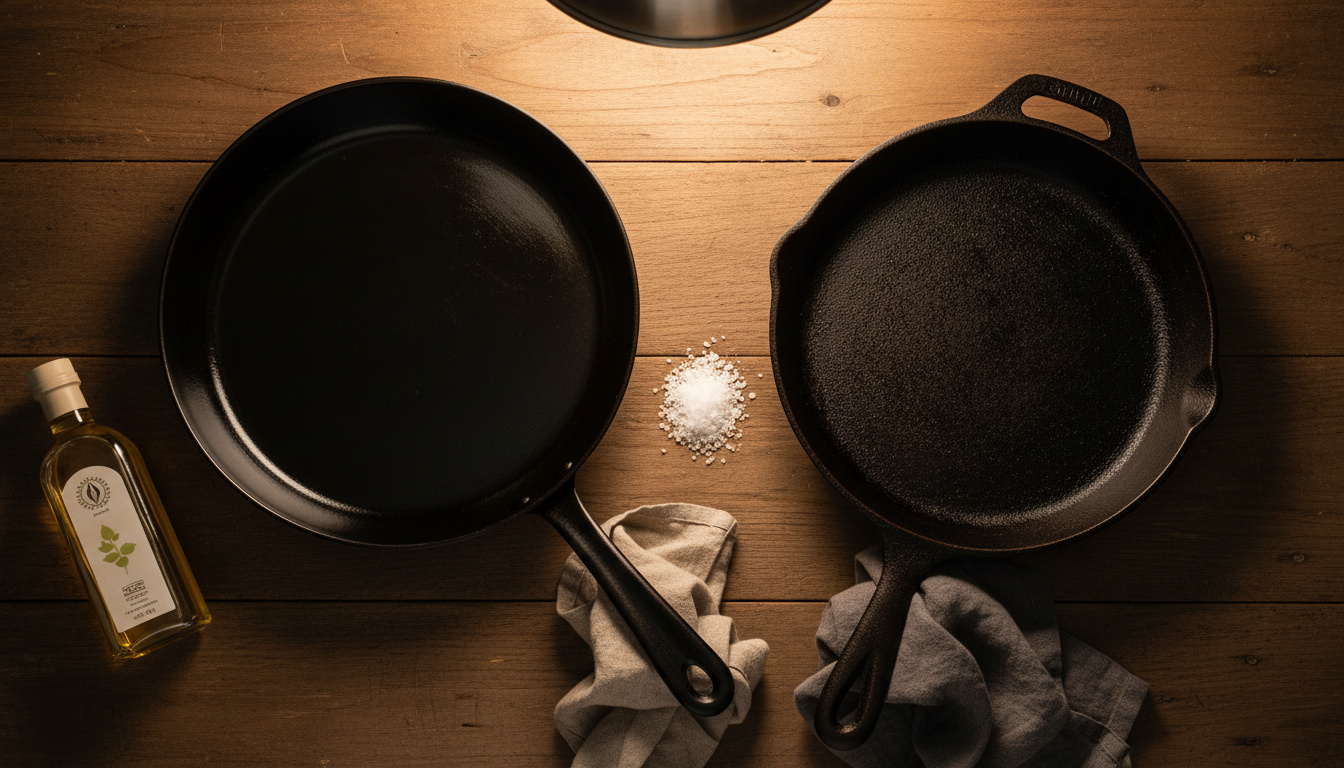
Carbon steel pans occupy a distinct niche in modern kitchens. These skillets deliver the high-heat performance cast iron is famous for, yet weigh significantly less, making them favorites among line cooks and home chefs who need maneuverability at stove-to-oven temperatures exceeding 500°F. Unlike synthetic nonstick coatings, carbon steel develops a natural patina through seasoning—a polymerized oil layer that creates slick, food-release properties without PFOA or PTFE.
The market offers substantial value, with 10- to 12-inch skillets typically priced between $30 and $100. Induction cooktop compatibility broadens their appeal beyond gas ranges, while the material’s 99% iron composition ensures rapid, even heating. However, this iron content demands respect: moisture exposure triggers oxidation, necessitating specific maintenance protocols distinct from stainless steel or enameled cookware.
For cooks weighing equipment decisions, carbon steel presents a hybrid solution. It bridges the thermal retention of cast iron with the responsiveness of stainless steel, though it requires an initial investment of time for seasoning and ongoing vigilance against rust. The payoff is a versatile, lifetime-lasting pan suitable for searing steaks, stir-frying vegetables, or baking cornbread.
What Is a Carbon Steel Pan?
| Material Composition 99% iron, 1% carbon alloy |
Weight Range (10-12″) 3–5 pounds (significantly lighter than cast iron) |
Heat Tolerance Safe to 1200°F+; oven and broiler compatible |
Price Range $30–$100 for quality domestic and import models |
- Lightweight advantage: At roughly half the weight of equivalent cast iron, carbon steel allows one-handed flipping and shaking.
- Thermal responsiveness: Heats faster than cast iron while maintaining superior heat retention compared to stainless steel.
- Induction compatibility: Magnetic properties ensure performance on induction, electric, and gas cooktops.
- Seasoning requirement: Requires polymerized oil layers to prevent rust and achieve nonstick performance.
- Professional preference: Standard equipment in French and Asian restaurant kitchens for high-heat searing.
- Maintenance commitment: Demands immediate drying and oiling after washing to prevent oxidation.
- Affordable durability: Lifespan exceeds decades with proper care, outlasting coated nonstick alternatives.
| Feature | Carbon Steel | Cast Iron | Stainless Steel |
|---|---|---|---|
| Weight (10″ skillet) | 3–4 lbs | 6–8 lbs | 2–3 lbs (less heat retention) |
| Heat Retention | Excellent, rapid response | Superior, holds longest | Good, slower response |
| Nonstick Property | Develops with seasoning | Requires similar seasoning | None without oil |
| Maintenance | Seasoning and rust prevention | Seasoning required, heavier to clean | Dishwasher safe, no seasoning |
| Induction Safe | Yes | Yes | Yes (if magnetic grade) |
| High Heat Tolerance | Ideal (preheat slowly) | Excellent | Risk of warping |
| Typical Price Range | $30–$100 | $25–$200 | $50–$300+ |
| Primary Advantage | Lightweight pro performance | Unmatched heat retention | Low maintenance |
| Key Disadvantage | Rust-prone if neglected | Very heavy, slow to heat | Food sticks without fat |
How Do You Season a Carbon Steel Pan?
Seasoning transforms raw carbon steel from a reactive, rust-vulnerable surface into a resilient, naturally nonstick cooking vessel. The process involves polymerizing thin layers of oil through controlled heating, creating a protective barrier against moisture and acidic foods.
Initial Cleaning and Preparation
New carbon steel pans arrive with a protective factory coating or shipping residue that requires removal. Santa Barbara Forge recommends washing the pan once with hot water and mild soap, scrubbing gently to remove any residues, then drying the surface completely with a towel or by placing it over low heat until all moisture evaporates.
The Oil and Heat Method
Apply a thin layer of high-smoke-point oil—grapeseed, flaxseed, or vegetable oil work effectively—covering the entire cooking surface and exterior. GreenPan’s technical guidance suggests heating the pan upside-down in a 450–500°F oven for one hour, or over medium-high heat on a stovetop until the oil smokes and polymerizes. Repeat this process two to three times to establish a foundational seasoning layer.
Flaxseed oil creates the hardest seasoning layers due to high omega-3 content, though it requires careful application to avoid sticky residues. Grapeseed oil offers a practical balance of availability and smoke point at 420°F, making it suitable for stovetop seasoning without specialized ventilation.
Building the Patina Through Cooking
The initial seasoning provides a base, but regular cooking with fatty proteins accelerates patina development. Misen documentation indicates that bacon, sausage, or shallow-frying applications deposit fats that bond to the surface, gradually filling microscopic pores. Avoid acidic ingredients like tomatoes or wine reductions during the first dozen uses, as these strip nascent seasoning layers.
Carbon Steel Pan vs Cast Iron: Key Differences
While both materials rely on iron and seasoning, their physical properties and performance characteristics diverge significantly in professional and domestic environments.
Weight and Handling
Lodge’s technical specifications confirm that carbon steel pans weigh roughly 50% less than equivalent cast iron models. This weight differential affects heat retention—cast iron holds temperature longer after removal from heat, while carbon steel responds faster to burner adjustments, offering precise control for delicate sauces or rapid stir-frying.
Maintenance Requirements
Both materials demand seasoning and rust prevention, yet carbon steel’s thinner construction (typically 2–3mm versus 4–5mm for cast iron) makes it more susceptible to thermal shock. Manufacturer data warns against plunging hot carbon steel into cold water, which can warp the cooking surface or cause flash rusting along stress fractures.
Surface Texture and Cooking Performance
Cast iron typically features a sand-cast, slightly rough surface that holds seasoning mechanically. Carbon steel starts smoother, requiring more initial cooking cycles to achieve equivalent nonstick performance. However, the smoother base excels at releasing eggs and crepes once seasoned, whereas cast iron’s texture can grip food more aggressively despite seasoning.
What Is the Best Carbon Steel Pan?
Selection depends on handle ergonomics, pre-seasoning quality, and thickness consistency. The market segments between handcrafted artisan pieces and mass-produced workhorses, with 2025 models emphasizing lighter constructions and improved factory seasoning.
Professional Grade Selections
De Buyer’s Mineral B line represents the French blue steel tradition, utilizing thick 3mm plates that resist warping under extreme heat. Santa Barbara Forge’s Sonora Collection offers handcrafted options with elongated handles for oven clearance, targeting cooks who transition frequently between stovetop and open flame.
Value Options for Home Cooks
Lodge’s carbon steel skillets provide accessible entry points around $30–$50, arriving pre-seasoned with a foundational coating sufficient for immediate cooking of fatty foods. Misen’s offerings include detailed seasoning guides and slightly smoother surfaces that reduce initial sticking compared to traditional textures.
Regardless of brand selection, immediate drying and light oiling after each wash remains non-negotiable. Even premium carbon steel develops orange oxidation within hours if stored with residual moisture, requiring abrasive restoration that strips seasoning.
Ten to twelve inches represents the optimal diameter for home stovetops, balancing heat distribution with storage practicality. Thicker pans (3mm+) better resist warping on induction cooktops where magnetic pull can stress thinner materials.
How Long Does Seasoning Take to Develop?
The progression from bare metal to fully nonstick cooking surface follows a predictable timeline, though individual results vary based on cooking frequency and fat content.
- Initial Preparation (Day 1): Remove factory coating with hot soapy water, dry completely, and apply first seasoning layer via oven or stovetop method.
- Foundation Building (Days 1–3): Complete two to three seasoning cycles with thin oil applications, heating until polymerization creates a matte black finish.
- Early Cooking Phase (Days 3–14): Restrict usage to high-fat proteins (bacon, duck fat, ground meats) to deposit carbonized layers; avoid eggs or acidic vegetables initially.
- Surface Maturation (Weeks 2–4): Gradual introduction of sticky foods (pancakes, fish) as the patina darkens to deep brown or black, indicating sufficient polymer buildup.
- Full Performance (Month 2+): Achieves slick, nonstick release comparable to synthetic coatings, withstanding moderate acidic ingredients like quick pan sauces.
What Are the Facts About Carbon Steel Safety?
| Established Information | Information That Remains Unclear |
|---|---|
|
|
Why Do Professional Kitchens Prefer Carbon Steel?
The tradition of French “blue steel” pans dates to the early 20th century, when line cooks needed lightweight alternatives to cast iron for flambé techniques and rapid sautéing. Restaurant adoption surged because carbon steel withstands the thermal abuse of commercial gas burners while lightening the physical load during eight-hour shifts.
Home kitchen adaptation accelerated in the 2010s as consumers sought alternatives to disposable nonstick cookware. The material’s compatibility with induction technology—now standard in European and Asian domestic markets—further cemented its 2025 relevance. Unlike home cast iron collections often relegated to decorative status, carbon steel’s maneuverability encourages daily use, accelerating the seasoning process through repeated high-heat cooking.
For those exploring broader kitchen equipment comparisons, examining the Kmart Food Processor – Best Picks Prices Reviews reveals similar value propositions in small appliances: affordable durability requiring specific maintenance protocols.
What Do Manufacturers Recommend for Care?
“After cooking, wipe the pan with a paper towel, rinse with hot water using minimal or no soap, dry immediately over low heat, and apply a thin layer of oil before storing.”
— Lodge Manufacturing Care Guidelines
“Regular cooking builds seasoning naturally. The pan darkens and becomes increasingly nonstick with each proper use, particularly with fatty foods that deposit polymerizing oils.”
— De Buyer Maintenance Documentation
“Never dishwasher clean carbon steel. The aggressive detergents strip seasoning layers and promote flash rusting in the drying cycle’s moisture-rich environment.”
— GreenPan Technical Support
Is a Carbon Steel Pan Worth the Investment?
For cooks prioritizing high-heat searing, lightweight handling, and induction compatibility, carbon steel delivers professional performance at accessible price points. The initial learning curve—mastering seasoning rituals and rust prevention—yields a cooking surface that outperforms stainless steel in nonstick properties and cast iron in maneuverability. With proper maintenance, these pans transition from kitchen tools to heirlooms, improving with each use rather than degrading like synthetic alternatives. The decision ultimately hinges on willingness to adopt the wash-dry-oil discipline; for those committed to the protocol, carbon steel represents 2025’s most versatile cookware investment. For health-related kitchen inquiries, the How to Stop Hiccups – Proven Remedies for Adults and Babies offers supplementary wellness guidance.
Common Questions About Carbon Steel Cookware
Are carbon steel pans safe for acidic foods?
Once fully seasoned (typically after one month of regular use), carbon steel handles brief acidic exposures like wine deglazing or tomato sauce. Extended simmering of acidic ingredients may strip seasoning and impart metallic flavors during the pan’s early life.
Which performs better: carbon steel or stainless steel?
Carbon steel achieves superior browning and Maillard reactions due to faster heat response and seasoning properties. Stainless steel requires more oil to prevent sticking but offers dishwasher convenience and zero rust risk, suiting low-maintenance preferences.
How long does a carbon steel pan typically last?
With consistent maintenance, carbon steel spans multiple decades. Unlike coated nonstick requiring replacement every 3–5 years, carbon steel endures indefinitely—surface damage can be remedied through sanding and re-seasoning rather than disposal.
Can metal utensils scratch carbon steel pans?
Metal spatulas and whisks do not damage carbon steel seasoning layers, which are chemically bonded polymerized oils rather than surface coatings. Light scratching may occur but self-heals during subsequent cooking sessions.
Why does my carbon steel pan show discoloration?
Color variation from silver to bronze to black indicates seasoning development stages, not contamination. Uniform black patina emerges after weeks of use; spotty discoloration simply reflects areas receiving more oil exposure during cooking cycles.
How do I remove rust from a carbon steel pan?
Light rust responds to coarse salt and oil scrubbing; heavier oxidation requires vinegar soaking or steel wool followed by complete re-seasoning. Immediate intervention prevents pitting that compromises cooking performance.
Can carbon steel pans warp on induction cooktops?
Thin-gauge pans (under 2mm) risk warping when preheated rapidly on high induction settings. Gradual heating from medium power allows thermal expansion without distortion; thicker 3mm professional models resist warping across all heat sources.
Related stories




Liam O'Brien covers Australian politics and public affairs for Australia Current.