
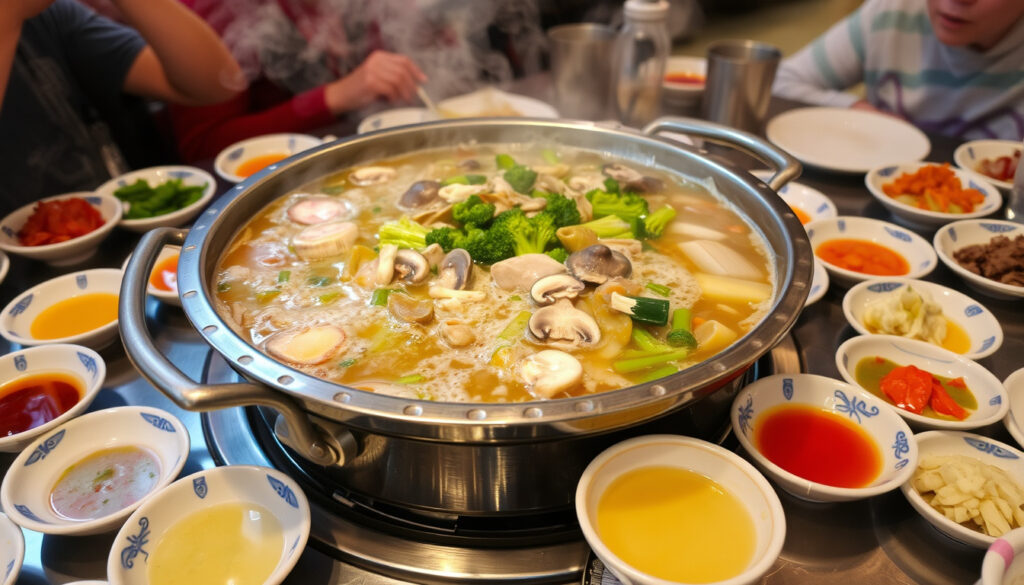
Steam rises from a bubbling pot at the center of the table as friends drop ingredients into the broth. If you’ve never tried hot pot, the process can feel intimidating—but this guide walks through origins, etiquette, health considerations, and step-by-step instructions so first-timers can dig in with confidence.
Origin: China (Mongolian influence) · Cooking Time per Slice: 15–30 seconds for meat · Typical Dipping Sauces: Sesame, Soy, Chili · Common Broth Bases: Spicy (Sichuan), Mild (clear chicken, mushroom)
Quick snapshot
- Hot pot originated in China (Wikipedia (peer-reviewed encyclopedia))
- Cooking meat first is recommended for broth flavor (Mashed (food publication))
- Spicy broth can irritate the digestive tract (Wong’s Late Night Hot Pot (restaurant chain))
- Exact date of origin of hot pot (Wikipedia (peer-reviewed encyclopedia))
- Whether hot pot was independently invented in Korea and Japan or spread from China (Wikipedia (peer-reviewed encyclopedia))
- Hot pot’s popularity in the US has grown significantly, with all-you-can-eat and prepackaged combo formats becoming common (Northern Virginia Magazine (regional lifestyle magazine))
- More restaurants are offering divided broths and sauce bars for customization (Mashed (food publication); Northern Virginia Magazine (regional lifestyle magazine))
Four key facts that define hot pot at a glance:
| Attribute | Value |
|---|---|
| Origin | China (Mongolian influence) (Wikipedia) |
| Cooking Time per Slice | 15–30 seconds for meat (Wong’s) |
| Typical Dipping Sauces | Sesame, Soy, Chili (Cold Tea Collective) |
| Common Broth Bases | Spicy (Sichuan), Mild (clear chicken, mushroom) (Mashed) |
What exactly is a hot pot?
Hot pot is a Chinese cooking method where raw ingredients are cooked in a simmering broth at the table. Diners sit around a central pot of continuously boiling broth and dip thin slices of meat, vegetables, mushrooms, tofu, and noodles into it. Each piece cooks in seconds and is then eaten with a personalized dipping sauce. The meal is communal, interactive, and highly customizable.
What are common hot pot ingredients?
- Thinly sliced beef, lamb, or pork (Mashed (food publication))
- Leafy greens like bok choy, spinach, and lettuce
- Mushrooms (enoki, shiitake, oyster)
- Tofu and tofu skin
- Starchy items: potatoes, corn, taro, and noodles (Northern Virginia Magazine (regional lifestyle magazine))
- Dumplings, fish balls, and seafood
A beginner who loads the pot with everything at once will end up with cold broth, overcooked greens, and undercooked meat. Patience and small batches are the secret to a great hot pot meal.
The implication: hot pot’s simplicity is deceptive. The same pot can produce a delicate clear broth or a fiery Sichuan base, and ingredient choice dramatically changes the flavor profile.
Is hotpot Korean or Chinese?
Hot pot originated in China, with Mongolian-style hot pot as an early form. Korean hotpot (jeongol) is a related but distinct dish, often seasoned with gochujang. Japanese shabu-shabu involves thinner slices and a lighter broth. While all three share a communal boiling concept, the broths, condiments, and ingredient lists differ significantly.
What is a Japanese hotpot?
Japanese shabu-shabu uses ultra-thin slices of beef or pork cooked in a mild kombu dashi broth. The meat is swished back and forth – the name comes from the “shabu-shabu” sound – and dipped in ponzu or sesame sauce. Unlike the strong spices of Sichuan hot pot, shabu-shabu emphasizes the natural flavor of the ingredients.
Three regional styles, one table:
| Feature | Chinese Hot Pot | Japanese Shabu-Shabu | Korean Jeongol |
|---|---|---|---|
| Origin | China (Mongolian) (Wikipedia) | Japan (20th century) (Wikipedia) | Korea (Wikipedia) |
| Broth base | Spicy Sichuan, chicken, tomato, mushroom | Kombu dashi (seaweed) | Gochujang, soy sauce, anchovy |
| Meat thickness | Thin (1–2 mm) | Very thin (paper-thin) | Thin to medium slices |
| Dipping sauce | Sesame, soy, garlic, chili oil | Ponzu, goma (sesame) | Gochujang-based ssamjang |
| Cooking style | Communal pot, add in rounds | Each diner cooks own pieces | Stew-like, pre-arranged in pot |
The pattern: broth is the defining element. Chinese hot pot offers the widest range of flavors, Japanese shabu-shabu prioritizes umami through simplicity, and Korean jeongol leans into fermented chili heat.
What are the rules of hot pot?
Hot pot etiquette revolves around common sense that keeps the meal fun and safe. Multiple guides agree on core practices.
What do you eat first in a hot pot?
- Start with meat – especially fatty cuts – to enrich the broth (Mashed (food publication))
- Add vegetables and tofu after the meat has cooked
- Noodles and dumplings go in last to avoid overcooking (Northern Virginia Magazine (regional lifestyle magazine))
Other important etiquette:
- Use separate chopsticks for raw and cooked food to avoid cross-contamination (Wong’s Late Night Hot Pot (restaurant chain))
- Do not overload the pot; cook in small batches to maintain broth temperature (Wong’s Late Night Hot Pot)
- Serve others before yourself in formal settings (Cold Tea Collective (Asian culture platform))
- Tie back long hair to avoid it dipping into the broth (Cold Tea Collective (Asian culture platform))
Using communal utensils is safer but can feel impersonal among close friends; many families use personal chopsticks after the first round of meat. The key is knowing your table.
What this means: hot pot is relaxed, but a few hygiene habits and cooking sequences make the difference between a great meal and a frustrating one.
Is hot pot healthy to eat?
Hot pot can be a balanced meal, but the health outcome depends heavily on the choices you make. Lean proteins, plenty of vegetables, and a light broth keep it nutritious. However, there are clear risks.
Why is hotpot unhealthy?
- High sodium in broth and dipping sauces (Wong’s Late Night Hot Pot)
- High fat content from fatty meat cuts
- Risk of undercooked meat and cross-contamination (Wong’s Late Night Hot Pot)
- Spicy broth can irritate the digestive tract
Why do I always get diarrhea after hotpot?
Diarrhea after hot pot is common and usually tied to undercooked meat, excess oil, or an especially spicy broth. If the meat hasn’t fully cooked through (it should float and show no pink), bacteria can cause digestive upset. Very spicy Sichuan broth can also trigger loose stools in sensitive individuals.
What to avoid at Hotpot?
- Leaving raw meat unrefrigerated for long periods
- Reusing leftover broth – it collects oil and impurities
- Overindulging in high-sodium dipping sauces (Wong’s Late Night Hot Pot)
- Using plastic utensils near the boiling pot (they can melt) (Hot Pot Ambassador (etiquette blog))
All-you-can-eat hot pot restaurants sometimes penalize leftover food, encouraging over-ordering. Pace yourself and order in rounds (Northern Virginia Magazine).
The pattern: hot pot’s health profile is neutral – it can be a vegetable-rich meal or a sodium bomb. The diner’s choices decide which.
What do you eat first in a hot pot?
This question deserved its own section because the order of ingredients directly affects both flavor and safety. Follow this sequence for the best results.
- Meat (especially fatty cuts) – Cook first to enrich the broth (Mashed (food publication))
- Hardy vegetables – Potatoes, corn, carrots (take longer to cook) (Northern Virginia Magazine)
- Leafy greens and mushrooms – Cook quickly, add after meat
- Tofu and fish balls – Mid-meal
- Noodles and dumplings – Last, to prevent overcooking and sogginess
The catch: if you add everything at once, the broth temperature drops and cooking times become unpredictable. Small batches keep the boil strong.
Step-by-Step Guide to Eating Hot Pot
Ready to eat? Here’s a practical walkthrough from start to finish.
- Choose your broth – Decide between spicy, mild, or a divided pot for both (Mashed)
- Wait for a rolling boil – Ensure the broth is simmering before adding anything (Wong’s Late Night Hot Pot)
- Cook meat first – Swish thin slices for 15–30 seconds until no longer pink (Mashed)
- Add vegetables in batches – Hard veggies first, leafy greens later
- Dip and eat – Use your dipping sauce of choice
- Finish with noodles – Drop them in last and cook for 1–2 minutes
For beginners, ordering a prepackaged combo or all-you-can-eat format is a low-pressure way to start (Northern Virginia Magazine).
Confirmed facts vs. uncertainties
Confirmed facts
- Hot pot originated in China (Wikipedia)
- Cooking meat first is recommended for broth flavor (Mashed)
- Spicy broth can irritate the digestive tract (Wong’s)
What’s unclear
- Exact date of origin of hot pot (Wikipedia)
- Whether hot pot was independently invented in Korea and Japan or spread from China (Wikipedia)
Quotes from experts and guides
Hot pot is a Chinese cooking method where raw ingredients are cooked in a simmering broth at the table.
Wikipedia (peer-reviewed encyclopedia)
Hot pot is a flexible, communal meal with few hard rules.
Cold Tea Collective (Asian culture platform)
Meats are cooked when they float to the top and are no longer red.
Mashed (food publication)
The takeaway for first-timers: hot pot is forgiving. Even if you get the order wrong, the broth will still taste great, and you’ll improve with each visit.
For a practical example of this self-serve model in action, check out Big Way Hot Pots self-serve guide for locations and menu details.
Frequently asked questions
Can you use any type of meat for hot pot?
Thinly sliced beef, lamb, pork, and chicken work well. The key is thin slices – thicker cuts take too long to cook in the broth. Some restaurants offer specialty options like wagyu or seafood.
What is the difference between hot pot and fondue?
Hot pot uses a savory broth (often spicy or mild) and cooks raw ingredients at the table. Fondue uses melted cheese or chocolate and typically involves bread or fruit. Both are communal but completely different flavor profiles.
Is hot pot gluten-free?
It can be. Choose a clear broth (avoid soy sauce-based broths if you’re sensitive) and check that dipping sauces don’t contain wheat. Many hot pot restaurants offer gluten-free options.
How long does it take to prepare hot pot at home?
Prep time is about 20–30 minutes if you buy pre-sliced meat and pre-washed vegetables. The broth can be made from scratch in 15 minutes or bought in packets. Total meal time is about 1 hour.
Do you drink the broth after cooking?
Yes, many people drink the broth at the end of the meal after all ingredients have been cooked. It absorbs flavors from the meat and vegetables. Some caution against it if the broth is very oily or spicy.
What drinks pair well with hot pot?
Cold beer, iced tea, or sparkling water are popular because they cut through the richness and heat. Avoid heavy red wines – the spice can clash.
Can hot pot be made vegetarian?
Absolutely. Use a vegetable or mushroom broth, skip the meat, and load up on tofu, mushrooms, leafy greens, and noodles. Many hot pot restaurants now offer dedicated vegetarian options.
How do you clean a hot pot cooker?
Let the pot cool completely, discard the broth, and wash with warm soapy water. Avoid abrasive scrubbers on non-stick surfaces. Most electric hot pot pots have removable bowls that are dishwasher safe.
Related stories



Ben Hughes covers culture, lifestyle and society across Australia for Australia Current.