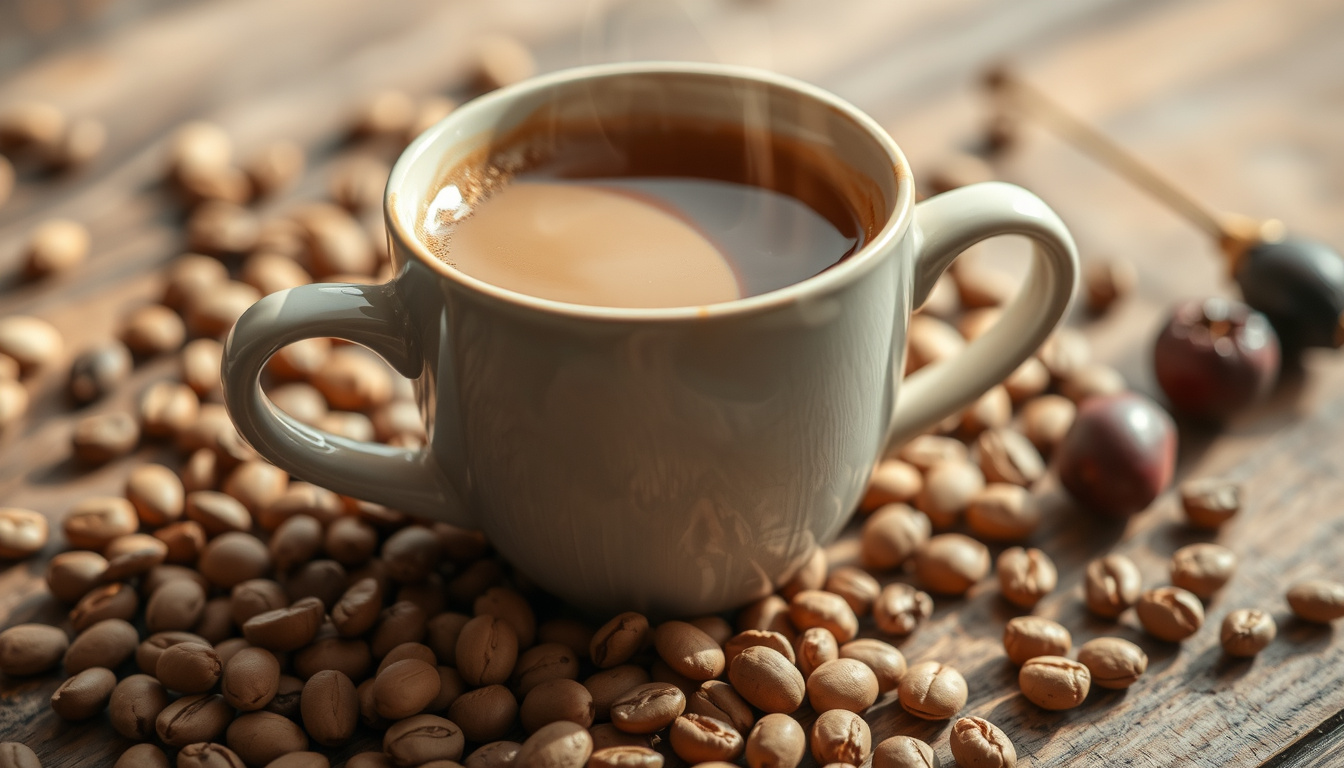
Anyone who’s grabbed a bag of light brown coffee beans at the store has probably wondered what makes them different from the dark, oily ones on the next shelf. Light roast coffee preserves the bean’s original character, delivering bright acidity and fruity notes—but it also brings a few surprises around caffeine and stomach comfort. This guide walks through what light roast actually is, how it compares to other roasts, and what the science says about its benefits for digestion and skin.
Roasting temperature range: 356–401°F (180–205°C) · Roasting duration: Typically 8–12 minutes · Bean appearance: Light brown, dry surface, no visible oil · Flavor profile: Bright, acidic, fruity, floral with light body · Caffeine per 8 oz cup: Approximately 95–200 mg · Key antioxidant: High chlorogenic acid content
Quick snapshot
- Light roast coffee has lower mass loss than dark roast (NCBI — review of coffee bioactive compounds)
- Chlorogenic acid levels decrease with longer roasting (PubMed — peer-reviewed study)
- Caffeine content per bean is stable across roast levels (PubMed — caffeine study)
- Whether light or dark roast is better for GERD symptom relief (Cleveland Clinic — digestive health guidance)
- Clinical evidence that drinking coffee reduces hyperpigmentation (NCBI — dermatology review)
- Exact temperature thresholds that define ‘light’ across different roasting systems (Cleveland Clinic — digestive health guidance)
- Light roast is roasted for 8–12 minutes, typically shorter than medium or dark roasts (Specialty Coffee Association — roasting standards)
- Brew light roast with pour-over, drip, or AeroPress to highlight its floral and fruity notes
- Cold brew also works and can reduce perceived acidity
What coffee is considered light roast?
Light roast coffee is defined by its internal bean temperature during roasting. According to the Specialty Coffee Association (industry standards body), beans are heated to 356–401°F (180–205°C), and the process stops just after the first crack—the moment when steam pressure causes the bean to pop. The result is a light brown bean with a dry surface and no visible oil.
What are light roast coffee beans?
They are green coffee beans that have been roasted only enough to turn them light brown while preserving the original agricultural character. The NCBI (review article on coffee bioactive compounds) notes that this short roasting time preserves heat-sensitive compounds such as chlorogenic acids, which contribute to the bright, tangy acidity and floral, fruity tasting notes. Because the bean structure remains dense, the body is typically light.
How does light roast differ from dark roast in appearance?
Light roast beans are light brown, dry, and matte. Dark roast beans, by contrast, are dark brown to almost black with a shiny, oily surface. The Food Research International (peer-reviewed journal) explains that extended roasting breaks down cell walls and pushes oils to the surface, giving dark roasts their glossy look.
The lighter the bean stays, the more you taste where it was grown—single‑origin coffees shine here, while oily dark beans often taste of roast, not origin.
What is the difference between light, medium, and dark roast coffee?
Three roast categories cover the spectrum, and the difference matters for taste, caffeine, and health compounds. The table below lines them up side by side.
Six characteristics, one pattern: roast level trades brightness for body and bitterness, but the biggest surprises are in the chemistry, not just the flavor.
| Characteristic | Light Roast | Medium Roast | Dark Roast |
|---|---|---|---|
| Internal temperature | 356–401°F | ~410–430°F | ~437–482°F |
| Surface oil | None | Trace | Visible, oily |
| Flavor notes | Fruity, floral, tangy | Balanced, caramel, nutty | Smoky, bittersweet, chocolate |
| Acidity | High (bright) | Medium | Low |
| Body | Light | Medium | Full |
| Chlorogenic acid | Highest retained (PubMed — study on roasting losses) | Moderate | Lowest |
| Caffeine (by weight) | ~1.1% (PubMed — caffeine stability study) | ~1.1% | ~1.1% |
| Common brew methods | Pour‑over, drip, AeroPress | Drip, French press | Espresso, French press |
The implication: light roast is the only level that preserves the bean’s agricultural signature at the cost of a thinner body and higher perceived acidity.
How do roasting levels affect taste and body?
As beans darken, sugars caramelize and Maillard reactions create roasted, bitter notes, while acids break down. A review article from NCBI (coffee chemistry overview) confirms that light roasts retain more organic acids (citric, malic), resulting in higher perceived acidity and a thinner body. Medium roasts strike a balance between acidity and body, and dark roasts deliver a heavy mouthfeel with dominant roast flavors.
Does roasting time change caffeine content?
By weight, the caffeine content of coffee beans is nearly identical across roast levels. A well‑known PubMed study (caffeine measurement study) found that caffeine doesn’t degrade significantly under typical roasting temperatures. However, because dark roasts lose more moisture and mass, a scoop of light roast beans (which are denser) will contain slightly more caffeine than the same scoop of dark roast. Healthline (consumer health publication) notes the difference is small—roughly 5–10% per scoop.
Which coffee roast is best for GERD?
Gastroesophageal reflux disease (GERD) affects tens of millions of people, and coffee is a known trigger for some. But the answer to which roast is gentler isn’t as simple as “light” or “dark.”
Is light roast easier on the stomach than dark roast?
Older research suggested that dark roast coffee contains more N-methylpyridinium (NMP), a compound linked in a PubMed study on gastric acid secretion to reduced stomach acid output. That would make dark roast seem better for GERD. Yet a randomized trial published in PubMed (RCT on low-acid coffee) found no significant difference in heartburn or regurgitation between low-acid and regular coffee. The Mayo Clinic (healthcare authority) recommends monitoring your own symptoms rather than choosing based on roast.
What is the worst drink for acid reflux?
The worst offenders, according to the Cleveland Clinic (digestive health guidance), are high-acid citrus juices, carbonated sodas, alcohol, and full‑fat dairy. Coffee itself can trigger reflux in sensitive individuals—not because of its pH alone but because caffeine may relax the lower esophageal sphincter (NCBI Bookshelf / StatPearls — caffeine and GERD).
A person with GERD who automatically switches to light roast hoping for less acidity may be disappointed—both roasts can trigger symptoms. The smarter move is to trial a low‑acid bean or a cold brew (which is chemically less extractive) before blaming the roast level.
The pattern: neither roast is a guaranteed fix for GERD; individual tolerance matters more than the roast profile.
Is it better to drink dark roast coffee or light roast coffee?
“Better” depends on whether your priority is antioxidant intake, stomach comfort, or flavor. Each roast has a legitimate edge.
Which roast has more health benefits?
Light roast wins on chlorogenic acid—the main antioxidant in coffee, which has been linked to anti‑inflammatory and anti‑diabetic effects in population studies. A review in NCBI (review of bioactive compounds) confirms that longer roasting degrades chlorogenic acid. Dark roast, meanwhile, forms melanoidins with their own antioxidant capacity, but these are less studied in human health.
Does light roast have more antioxidants?
Yes, for chlorogenic acid specifically. The PubMed study on roasting effects found that light roasts retain up to three times more chlorogenic acid than dark roasts from the same bean batch. However, the overall antioxidant capacity of coffee brews often stays similar because dark roasts generate other compounds during the Maillard reaction.
Does drinking coffee reduce hyperpigmentation?
This is one of those questions where social media claims run ahead of published science. Coffee contains caffeine and chlorogenic acid, both of which have anti‑inflammatory and antioxidant properties that could influence skin health. For more information on this popular SUV, check out our 2023 Jeep Grand Cherokee buying guide.
Can coffee lighten skin?
A dermatology review in NCBI (skin health review) discusses caffeine and polyphenols as topical agents that may reduce oxidative stress and inflammation—factors involved in hyperpigmentation. But the same review notes that evidence for oral coffee consumption specifically lightening hyperpigmented areas remains limited. Topical coffee scrubs can physically exfoliate and temporarily brighten skin, but that’s not the same as reducing melanin production.
What are the skin benefits of coffee?
Oral coffee consumption delivers systemic antioxidants that support general skin health, and the American Heart Association (policy position) notes moderate coffee intake is safe for most people. But no rigorous clinical trial has shown that drinking light roast coffee can treat hyperpigmentation better than drinking dark roast—or drinking tea, for that matter.
Relying on light roast coffee to fade dark spots would be a stretch. If skin concerns drive your coffee choice, the best move is to pair a light roast habit with a proven topical treatment like vitamin C or sunscreen—not skip the dermatologist.
The catch: oral coffee consumption supports general skin health through antioxidants, but direct evidence for treating hyperpigmentation is absent.
Pros and cons of light roast coffee
Upsides
- Highest chlorogenic acid content — more antioxidant potential
- Bright, complex flavor that highlights single‑origin characteristics
- Denser beans mean slightly more caffeine per scoop
- No oil buildup in your grinder compared to dark roasts
Downsides
- High perceived acidity can be sharp for some palates
- Thin body may feel weak to drinkers used to full‑bodied roasts
- May still trigger GERD symptoms despite lower NMP content
- Less forgiving to brew — over‑extraction brings unpleasant sourness
Quotes from industry authorities
Light roast coffee is defined as coffee roasted to an internal temperature between 356°F and 401°F, often ending just after first crack.
— Specialty Coffee Association (SCA), industry standard definition
Light roast coffee beans have a light body and no visible oil, preserving the original character of the bean.
— National Coffee Association (NCA), trade association guidance
biodynamic.coffee, coffeebrandcoffee.com, nutritionfacts.org, youtube.com, nutritionfacts.org, generalwarfieldscoffee.com
Frequently asked questions
What is the 2 hour coffee rule?
The “2‑hour rule” is a food safety guideline: brewed coffee should not sit at room temperature for more than two hours to avoid bacterial growth. It’s not a rule about when to drink caffeine for energy timing.
What are the 4 enemies of coffee?
Oxygen, moisture, heat, and light. Storing beans in an airtight, opaque container at room temperature keeps them fresh longest. Light roast beans are more porous and may stale faster than dark roasts, so proper storage is key.
How should I store light roast coffee to keep it fresh?
Use a vacuum‑sealed container in a cool, dark cupboard. Avoid the refrigerator—the moisture and odors ruin the beans. Grind only what you need immediately before brewing.
Can light roast coffee be used for espresso?
Yes, but it’s challenging. Light roasts are dense and acidic, requiring a finer grind and higher brew temperature. Many espresso enthusiasts prefer medium to dark roasts for easier extraction and richer crema.
Does light roast coffee have more antioxidants than dark roast?
Yes, for chlorogenic acid—the main antioxidant in green coffee. Light roasts retain significantly more of it, as shown in PubMed research on roasting effects. Total antioxidant capacity in the cup can be similar because dark roasts create other antioxidant compounds.
Is light roast coffee less acidic than dark roast?
No—light roast coffee has higher perceived acidity because it retains more organic acids. Dark roast tastes less acidic because those acids break down during longer roasting. However, the actual pH of both brews is similar (around 5 for both).
What is the best way to brew light roast coffee?
Pour‑over methods (Chemex, V60) or drip machines highlight the bright, fruity notes. Use water just off the boil (195–205°F) and a medium‑fine grind. For a smoother cup, try immersion brewing with an AeroPress or cold brew.
For the health‑conscious coffee drinker in the U.S., the choice between roasts comes down to a simple trade: light roast delivers more antioxidants and a punch of origin flavor, but it’s sharper on the tongue and your stomach may call foul. The catch is that neither roast is a magic bullet for GERD or skin tone. Read our guide to acid reflux symptoms for a deeper look at how coffee fits into a GERD‑friendly diet, or explore Lion’s Mane Mushroom: Benefits, Side Effects & Facts for another natural source of antioxidants.
Related stories



Ryan Hughes is Senior Reporter at Australia Current, covering breaking stories and explainers.