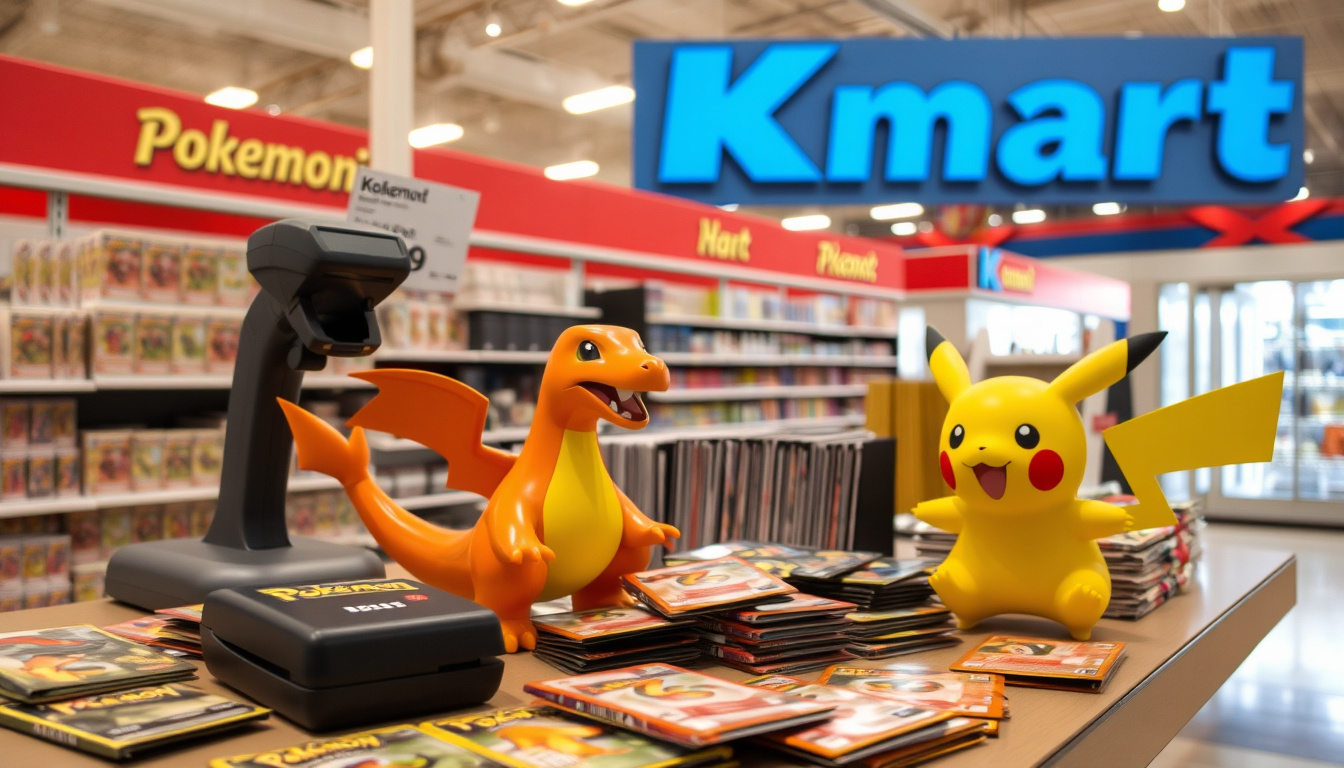
Anyone who’s passed a Kmart checkout in Australia recently has probably spotted them: booster packs, tins, and collections stacked near the registers. Pokémon cards have gone from playground currency to serious collector assets, and the right find—like a sealed Pokemon Day 2026 Collection—can be worth far more than its AUD $30 price tag.
Most expensive Pokémon card sold: Pikachu Illustrator at $5,275,000 (2021) ·
First Edition Shadowless Charizard value: Up to $420,000 (PSA 10) ·
Kmart Australia stores offering Pokémon cards: Yes – online and in-store ·
Standard booster pack price at Kmart: Approx. $5–$10 AUD ·
Stores that temporarily stopped selling TCG: Target and Walmart (2021–2022)
Quick snapshot
- Kmart Australia sells Pokémon TCG products online and in-store (Kmart Australia official store)
- Pikachu Illustrator card sold for $5,275,000 at auction (PSA Card certification records)
- Target and Walmart temporarily halted TCG sales in 2021–2022 due to scalping (The Verge (technology news))
- Pokémon TCG launched in 1996 (Pokémon Company official site)
- Exact stock of specific sets at each Kmart location
- Whether Aldi will continue selling cards beyond limited-time promotions
- Future Lidl policy on regular Pokémon card sales in the UK
- 2025: Kmart releases Pokémon Day 2026 Collection (Kmart Australia)
- 2021–2022: Major retailers pause sales due to safety concerns (The Verge)
- 1999: First English edition released; Base Set Charizard becomes iconic (Kmart Australia)
- More Kmart pre-order options for upcoming sets (Kmart Australia pre-order page)
- Continued collector demand for high-grade vintage cards (TCGplayer marketplace data)
Kmart Pokémon Cards: Availability and Pricing
Kmart Australia currently stocks a range of Pokémon TCG products. The Pokemon Day 2026 Collection, priced at AUD $30, includes a foil promo Pikachu with a special stamp, a metallic coin with the 30th anniversary logo, and three booster packs from different expansions, according to the Kmart Australia official store (official retailer). Individual booster packs typically cost between $5 and $10 AUD. You can buy online with Australia-wide delivery, and the retailer now also offers pre-orders for select items – though each pre-order must be in a separate transaction, as noted on the Kmart Australia pre-order page (retailer policy).
The implication: Kmart is a reliable primary source for new releases at RRP, but stock varies by store. Checking online inventory before visiting saves time.
Does Aldi do Pokémon cards?
Aldi has occasionally run promotions featuring Pokémon cards in the UK and Australia, typically for special events. Shoppers report finding booster packs and tins in the middle aisle. However, availability is irregular and limited to when stock lasts. For consistent supply, Kmart Australia and dedicated toy retailers remain the better option.
Does Walmart sell Pokémon cards in store?
In the United States, Walmart continues to stock Pokémon TCG products in most locations after resuming sales following the 2021–2022 pause. The Verge (technology news) reported that the temporary halt was driven by safety concerns over large crowds. Now, you’ll find everything from single packs to elite trainer boxes on the shelves.
Do Lidl sell Pokémon cards?
Lidl has occasionally offered Pokémon card bundles, similar to Aldi’s approach. These are short-term promotions and not a regular stock item. As with Aldi, the window to buy is narrow. For a steady supply, Kmart and specialised game shops are more dependable.
Bottom line: Kmart Australia offers the most reliable and affordable access to new Pokémon TCG releases. Casual buyers: grab booster packs in-store. Collectors: the Pokémon Day 2026 Collection at $30 is worth considering for the exclusive promo. Pre-order early.
If you’re in Australia, Kmart is your best bet for picking up new sets like Destined Rivals and the Pokemon Day 2026 Collection at retail price – no markup from resellers.
What Pokémon card is worth $60,000?
Several cards have sold for five and six figures. The Pikachu Illustrator card – given out to winners of a 1997–1998 CoroCoro Comic contest – sold for $5,275,000 in 2021, making it the most expensive Pokémon card ever, per PSA Card (card grading authority). The 1999 First Edition Shadowless Charizard in PSA 10 condition has reached $420,000 at auction. So yes, a card worth $60,000 exists – the Illustrator alone exceeds that by a factor of 88.
What Pokémon card costs $1,000,000?
As of 2025, only the Pikachu Illustrator has crossed the million-dollar mark. Its rarity – reports say fewer than 40 copies exist – and the peak of the pandemic-era card boom drove the price to that level. No other card has publicly sold for seven figures, though a perfect-graded 1999 Charizard PSA 10 comes close.
Why is 1999 Charizard so expensive?
Nostalgia meets scarcity. The first English Base Set had a limited print run; Shadowless cards (no shadow on the right side of the art box) are even rarer. A PSA 10 grade – meaning flawless centering, corners, and surface – pushes the value into the hundreds of thousands. The TCGplayer (trading card marketplace) lists raw near-mint copies starting around $300, but condition is everything.
Is Your Charizard Card Worth Thousands?
Only if it’s a first edition Shadowless in near-mint condition, especially with a PSA 8 or higher. Check the bottom-left corner of the art: a small “Edition 1” stamp and no shadow under the Pokémon indicate a valuable variant. Use the TCGplayer (marketplace guide) to compare recent sales.
Bottom line: Casual collectors: your Charizards are probably worth $10–$50. Serious holders: get them graded. The difference between an ungraded card and a PSA 10 can be a factor of 100x.
What is the 10 rarest Pokémon card?
Rarity in Pokémon is determined by print run, distribution method, and condition. The following table shows the top 10 traditionally cited rarest cards, based on auction records and industry consensus.
| Rank | Card Name | Estimated Value (PSA 10) | Why It’s Rare |
|---|---|---|---|
| 1 | Pikachu Illustrator | $5,275,000 | Contest-only promo; ~40 copies |
| 2 | 1999 First Edition Shadowless Charizard | $420,000 | Low print, iconic artwork |
| 3 | Prerelease Raichu | $100,000+ | Only given to WotC staff and tournament judges |
| 4 | Master’s Key (2009) | $80,000 | Given only to Professor Challenge winners |
| 5 | 1999 Tropical Mega Battle Pikachu | $70,000 | Event-exclusive in Hawaii |
| 6 | 2001 World Championship No. 2 Trainer | $50,000 | One-of-a-kind prototype |
| 7 | 1998 Venusaur (No. 3 Trainer) | $45,000 | Second-place prize at tournaments |
| 8 | 1998 Blastoise (No. 3 Trainer) | $40,000 | Same tournament series as Venusaur |
| 9 | 1999 First Edition Holographic Shadowless Blastoise | $30,000 | Iconic starter; limited Shadowless print |
| 10 | 1999 First Edition Machamp (Shadowless) | $20,000 | High first-print run but Shadowless variant scarce |
The pattern: most of these cards were never sold in retail packs. They came from promotional events, contests, or tournament prizes. A regular booster pack will never contain them – only sealed vintage product or graded auctions will surface these grails.
Kmart Australia’s current shelves won’t hold a million-dollar card. But a sealed Pokemon Day 2026 Collection bought today for $30 could appreciate over decades – if the promo Pikachu achieves iconic status.
How do I spot fake Pokémon cards?
Fake cards have flooded the market, especially online. Here’s how to tell genuine from counterfeit.
What are common signs of fake cards?
- Weight and feel: Real cards have a specific thickness and a slight bend. Fake cards often feel flimsy or glossy.
- Color and font: Compare to an authentic card. Fake fonts are often bolder or misaligned.
- Back of card: The Poke Ball back should have an exact blue tone and pattern. Fakes misprint the navy or salmon.
- Texture: Modern holographic cards (Ultra Rare, Full Art) have a fingerprint-like texture. Fakes are smooth.
- Rarity symbol: Circle = common, diamond = uncommon, star = rare. Fakes sometimes use wrong symbols.
How to check Pokémon card authenticity?
The TCGplayer (marketplace authenticity guide) recommends using multiple data points: weight, edge alignment, and light test. Shine a bright light behind the card; real Pokémon TCG cards allow some light through the card stock. Fakes are usually opaque or let too much light through. When in doubt, buy from a trusted retailer like Kmart Australia or EB Games rather than third-party listings on auction sites.
What stores stopped selling Pokémon cards?
The COVID-era card boom created chaos. Large crowds and scalpers led two major US retailers to pause sales. Here’s the story.
Why did Target and Walmart stop selling?
The Verge (tech & gaming news) reported that Target ceased all TCG sales on May 14, 2021 after a fight broke out in a Wisconsin store. Walmart also limited sales to one pack per person before stopping entirely. Both retailers have since restocked, but purchasing might still be restricted at some locations. Kmart Australia, by contrast, continued selling throughout the period.
What is the 13 rule in Aldi?
In 2022, Aldi UK introduced a £13 cap on the price of Pokémon card items in its middle aisle – meaning no single TCG product could cost more than £13. This policy, reported in BBC News (UK news broadcaster), aimed to reduce resale and give more children a chance to buy. The rule is still in effect for Aldi’s card drops. In Australia, Aldi has not announced a similar policy.
Bottom line: Retailers that paused sales, like Target, have resumed – but with purchase limits. Aldi’s £13 rule keeps prices fair. Kmart Australia never stopped, which makes it a steady outlet for collectors Down Under.
“Pokémon cards at Kmart Australia are available both in-store and online, including the new Pokemon Day 2026 Collection.”
Kmart Australia (official retailer)
“The TCGplayer guide is the most comprehensive resource for authenticating cards – weight, texture, and font are the first things to check.”
TCGplayer (trading card authenticity resource)
“I’ve seen Kmart restock every few weeks – if you’re after new sets, check the website every Tuesday morning.”
Reddit user r/PokemonFansAustralia (community discussion)
Timeline: Key events in Pokémon TCG and Kmart
- – Pokémon TCG launched in Japan.
- – First English edition released. Base Set Charizard becomes iconic.
- – Pokémon card surge; scalping leads to stock shortages.
- – Pikachu Illustrator sells for $5.28 million.
- – Target and Walmart temporarily halt TCG sales due to safety concerns.
- – Kmart releases Pokémon Day 2026 Collection and Destined Rivals blister packs.
Frequently asked questions
Does Kmart sell Pokémon cards?
Yes – Kmart Australia sells Pokémon TCG products both online and in-store.
What Pokémon cards are available at Kmart?
Kmart stocks booster packs, tins, and collections like the Pokemon Day 2026 Collection. Stock depends on season and location.
Are Pokémon cards at Kmart cheaper than other stores?
Kmart typically sells at the manufacturer’s RRP – similar to Big W and EB Games. You won’t find markdowns, but no markups either.
Can I buy Pokémon cards online from Kmart?
Yes – Kmart Australia ships Pokémon cards Australia-wide via standard delivery.
Does Kmart ship Pokémon cards internationally?
No – Kmart Australia only delivers to Australian addresses.
How often does Kmart restock Pokémon cards?
Restocks vary by store. Checking online inventory before visiting is recommended.
Does Kmart sell individual booster packs or only tins?
Kmart sells both individual booster packs (approx. $5–$10 AUD) and larger tins or collections.
Confirmed facts
- Kmart Australia sells Pokémon cards (official website)
- Pikachu Illustrator is the most expensive card at $5.28M (PSA records)
- Target and Walmart temporarily suspended TCG sales (The Verge)
- Aldi UK introduced a £13 cap (BBC)
What’s unclear
- Exact set availability at each Kmart location
- Future Aldi policy on regular card sales
- Whether Lidl will continue promotions
For Australian collectors and kids alike, Kmart remains the most accessible and reliable source for Pokémon TCG products at retail price. The takeaway: if you see the Pokemon Day 2026 Collection or Destined Rivals boosters on the shelf, grab them – they won’t last long. For parents looking for an affordable hobby, a $10 booster pack from Kmart offers hours of trading fun. For investors, buying sealed Kmart product now and holding for 20 years could mirror the 1999 Charizard story – but only time will tell. In the meantime, watch out for fakes and know that the real treasure is often in the unopened pack.
Related stories



Rachel Bennett leads fact-checking, source verification and corrections at Australia Current.