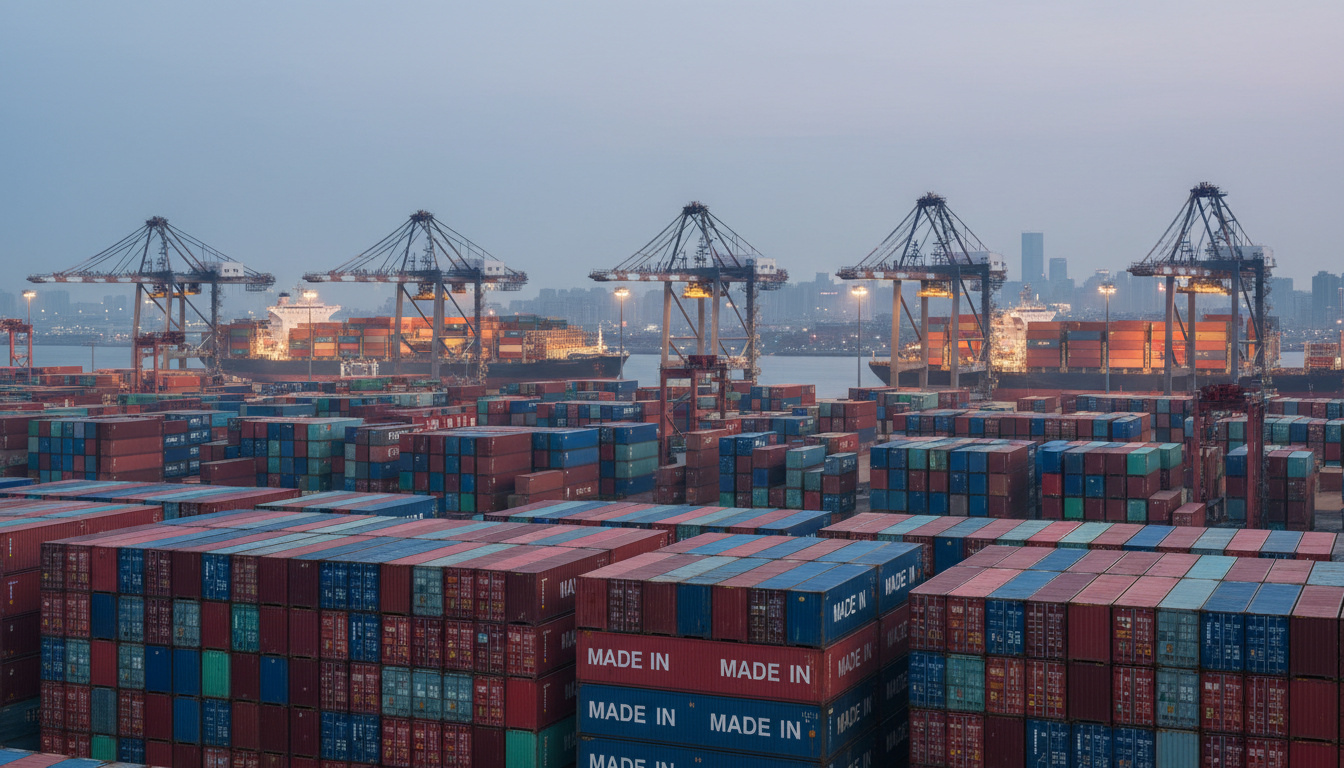

The phrase “Made in China” appears on everything from consumer electronics to apparel, yet its meaning extends far beyond a simple country-of-origin stamp. For decades, this label has triggered complex reactions ranging from concerns about quality to recognition of manufacturing indispensability. Understanding what the designation actually represents requires examining customs regulations, historical shifts, and the evolution of global supply chains.
Today, the label encompasses products manufactured through processes that vary dramatically in sophistication and oversight. While some associate the mark with budget pricing, others recognize it as the hallmark of advanced technological assembly. The reality involves a matrix of factors including tariff classifications, colonial-era perception biases, and deliberate policy shifts like the Made in China 2025 initiative.
What Does ‘Made in China’ Mean?
The designation indicates that a product was manufactured or produced in China and represents the country of origin for tariff and customs purposes. According to trade experts, the label implies that the majority, if not all, of a product’s components are sourced and manufactured within Chinese borders, with the entire production process occurring domestically.
- Meaning: Country-of-origin label for customs and tariff classification
- Scope: Majority components sourced and manufactured within China
- Distinction: Different from “Assembled in China” where parts originate elsewhere
- Foundation: Entire production process from parts to final product occurs domestically
Key Insights
- Label requires “substantial transformation” within Chinese borders per FTC guidelines
- Applies to products representing $3.6 trillion in annual export value
- Distinct from assembly-only operations that import foreign components
- Subject to customs classifications affecting tariff rates and trade compliance
- Evolved from wartime boycott slogan to modern industrial identifier
- Central to China’s Made in China 2025 industrial policy framework
Critical Distinctions
It is important to distinguish “Made in China” from “Assembled in China.” Manufacturing analysts note that the latter indicates components may originate from various countries, with China’s role limited to assembling parts into finished products rather than manufacturing the components themselves.
| Fact | Detail | Source Type |
|---|---|---|
| Legal Definition | Product manufactured in China with majority domestic components | Trade Authority |
| Assembly Distinction | “Made” requires full production; “Assembled” allows foreign parts | Industry Analysis |
| Export Value | $3.6 trillion annually | World Bank |
| Global Share | 28% of manufacturing output | UN Statistics |
| Policy Framework | Made in China 2025 launched 2015 | Government Policy |
| Customs Rule | FTC substantial transformation standard | Regulatory Authority |
Why Are So Many Products Made in China?
China’s manufacturing dominance emerged after the country opened to the world in the 1980s, when it became a popular manufacturing hub known for cheap labor costs, lax regulations, and a business-friendly environment. By 2010, trade data confirms China had surpassed Germany as the world’s top exporter, today remaining among the top three exporters alongside the United States and Germany.
The Cost and Infrastructure Advantage
Initial growth stemmed from cost advantages, but current leadership derives from comprehensive supply chain infrastructure and massive engineering workforce capabilities. International brands rely on Chinese contract manufacturers because of sophisticated tooling capabilities, not merely for cost savings.
Apple CEO Tim Cook stated in 2017 that China lost its place as a low labor cost manufacturing nation many years ago, emphasizing instead the country’s skilled workforce and sheer volume of engineers needed for advanced tooling and production.
Supply Chain Concentration
The concentration of component suppliers, raw material processors, and technical expertise within Chinese borders creates efficiencies that are difficult to replicate elsewhere. This ecosystem allows for rapid prototyping and scaling that attracts high-tech manufacturers.
Is ‘Made in China’ a Sign of Poor Quality?
Historically, “Made in China” became synonymous with cheap and low-quality products, a stereotype that consumers have widely held. However, this perception has roots deeper than modern market dynamics—it reflects colonial-era biases where Westerners viewed their production methods as superior, unfairly stigmatizing Asian manufacturing.
Price Competition vs. Capability
The quality association has been influenced by pricing competition. As virtually everything became manufactured in China, competition shifted from quality to price, resulting in lower-quality products across brands. This does not necessarily reflect the capabilities of Chinese manufacturers themselves—international companies often design products, select materials, and specify production methods, with Chinese factories simply fulfilling contractual obligations.
Quality consistency varies significantly based on which international company designed the product and specified the materials, rather than indicating the inherent capabilities of Chinese manufacturing facilities.
The Modern Shift
Contemporary Chinese manufacturing produces sophisticated electronics, biotechnology equipment, and aerospace components. The transition from low-end to high-end production represents a fundamental evolution in the nation’s industrial capabilities.
What Is the History of ‘Made in China’?
The term carries a longer history than commonly assumed. Historical analysis reveals it was first popularly used during the Second Sino-Japanese War in the early 1940s, when Chinese civilians began boycotting Japanese and foreign-made products as part of a National Salvation Effort.
Wartime Origins
During the 1940s boycott campaigns, the phrase served as a patriotic call to support domestic industry. At that time, China’s economy lacked a framework for effective industrialization as we understand it today, making the early usage largely symbolic rather than descriptive of manufacturing capacity.
The 2025 Initiative
Since 2015, the Chinese government has been attempting to reinvent the “Made in China” label through the Made in China 2025 Campaign, which focuses on developing China’s domestic technological industries, including aerospace and biotechnology. Critics have raised concerns that China is obstructing free trade through subsidies for domestic industries under this framework.
The Made in China 2025 campaign mirrors the 1940s National Salvation Effort in promoting domestic purchasing and preventing foreign goods from entry, though the economic contexts and global trade implications differ dramatically.
When Did ‘Made in China’ Become Dominant?
- : Term emerges during Second Sino-Japanese War as boycott slogan. Historical Trade Archives
- : China opens to global manufacturing; becomes hub for production leveraging cost advantages. Economic Development Records
- : China surpasses Germany as world’s top exporter. International Trade Data
- : Launch of Made in China 2025 initiative to shift toward high-tech sectors. Policy Documentation
- : Major industry executives confirm shift from low-cost labor to skilled engineering focus. Corporate Statements
- : Escalating trade tensions prompt renewed scrutiny of manufacturing origins and tariff classifications. Trade Reports
What Do We Know for Certain About ‘Made in China’?
| Established Information | Information That Remains Uncertain |
|---|---|
| Label indicates country of origin for tariff purposes per FTC substantial transformation guidelines | Future dominance amid accelerating supply chain diversification to Vietnam and India |
| “Made in China” requires majority domestic component sourcing versus “Assembled” designation | Quality consistency across the thousands of individual factories and subcontractors |
| China ranked as world’s top exporter in 2010 | Long-term outcomes of Made in China 2025 high-tech transition targets |
| Products designed by U.S. companies but manufactured in China may be tariffed as American products | Whether subsidized domestic industries will trigger sustained trade obstruction allegations |
Why Does the Label Carry Such Geopolitical Weight?
The “Made in China” label carries significance rooted in colonial-era perceptions where Western manufacturing methods were viewed as inherently superior, creating biases that unfairly stigmatized Asian production. These historical prejudices combined with modern trade tensions to create a complex environment where the same label appears on both budget consumer goods and sophisticated electronics designed by François-Henri Pinault – Kering President Net Worth Family associated luxury brands and mass-market retailers alike. The term “Made in China” emerged during the Second Sino-Japanese War as a boycott slogan, and you can learn more about its meaning at thousand yard stare meaning.
Current customs classifications add another layer of complexity. Products manufactured in China but designed by American companies—such as those marked “Designed by Apple in California”—are tariffed as U.S. products in customs classifications, regardless of manufacturing location. This regulatory distinction creates scenarios where the country of origin label does not align with tariff treatment.
The phrase also serves as shorthand for broader economic anxieties regarding manufacturing outsourcing, intellectual property, and national industrial strategies. As China’s position in advanced industrialized sectors improves, stakeholders have recognized the need to change negative impressions associated with the label.
What Do Authorities Say About Chinese Manufacturing?
“China lost its place as a low labor cost manufacturing nation many years ago. The reason companies manufacture there is the skill and engineering capacity.”
— Tim Cook, CEO of Apple, 2017
“The campaign has historical parallels to the 1940s National Salvation Effort in that both promote buying domestically, though critics raise concerns about obstructing free trade.”
— Business Today Economic Analysis
What Should Consumers Understand About ‘Made in China’?
The “Made in China” designation represents a complex intersection of customs law, historical development, and manufacturing capability that defies simple categorization. While the label originated from wartime boycotts and evolved through decades of cost-driven production, modern Chinese manufacturing encompasses both high-volume consumer goods and advanced technological assembly. Understanding the distinction between manufacturing location and brand ownership proves essential for navigating tariffs and quality expectations, whether evaluating a Kmart Food Processor – Best Picks Prices Reviews or high-end electronics.
Frequently Asked Questions
What alternatives exist to Made in China products?
Manufacturing has diversified to Vietnam, India, and Mexico, though China retains dominance in comprehensive supply chain infrastructure and engineering workforce scale that is difficult to replicate immediately.
Has Made in China quality improved over time?
Quality varies by brand specifications rather than geography. Many Chinese factories now produce high-tech goods for major international companies using advanced tooling and skilled engineering.
What is the difference between Made in China and Assembled in China?
“Made in China” indicates majority components are sourced and manufactured domestically, while “Assembled in China” means components originate from various countries with final assembly occurring in China.
What is the Made in China 2025 initiative?
Launched in 2015, this policy aims to shift China’s economy from low-end manufacturing to high-end sectors including aerospace, biotechnology, artificial intelligence, and semiconductors.
Why do some products say Designed in California but Made in China?
This indicates American companies designed and branded the product while utilizing Chinese manufacturing capabilities. Customs classifications may treat these as U.S. products for tariff purposes despite the manufacturing location.
Is Made in China safe for electronics?
Safety depends on the international company’s quality control standards and material specifications rather than the manufacturing location itself. Major brands enforce strict oversight regardless of production country.
Why did Made in China dominate global manufacturing?
Initial dominance stemmed from 1980s cost advantages, but current leadership derives from comprehensive supply chains, engineering workforce volume, and advanced tooling capabilities unmatched elsewhere.
Related stories




Liam O'Brien covers Australian politics and public affairs for Australia Current.